A chance encounter: pottery and survival tips
 
    The approach of big journeys heightens the significance of all things, including chance. A few weeks ago I went to meet a friend’s flight at the Pittsburgh airport and ran into a familiar looking young woman with two adorable toddlers... a former student. We no sooner made eye contact and recognized one another, when she told me she was just in Pittsburgh for a few weeks visiting family. Her home for the past few years has been Fukoka Japan. 
    We exchanged e-mails over the weekend and she passed on some great information about pottery sites and tips for survival.  I am a bit anxious about my ability to get to historic pottery sites as I will be located in Chiba Prefecture, far from many of the centers with which I am already familiar. Regardless of the feasibility of my making it to them during this upcoming adventure, good pottery tips should not be squandered and will therefore be included in this blog for friends, students and colleagues to use as they see fit. Pottery sites recommended close to Fukoka include  Arita/Imari:  http://www.kougei.or.jp/english/crafts/0422/f0422.html  And Koishiwara: http://www.fukuoka-edu.ac.jp/~tomiohta/2002/exhibition/koishi0207.htm 
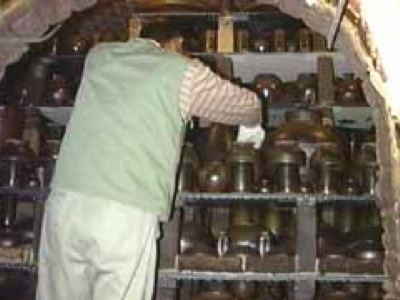
    A bit farther from Fukoka lies the town of Bizen, one of the first places in Japan to start making pottery.  Bizen has long been one of my favorite Japanese pottery regions from the time when I was a  teenager just getting interested in pottery.  After admiring Bizen wares at the Metropolitan Museum, I remember the cold walk to meet my brother near his Mercer Street studio. One of the first Japanese restaurants I recall going to in the 1970s was located nearby.  Named Bizen after the awesomely dark, rustic and moody vessels that adorned the tables and shelves, my brother and I would go there to sip steaming bowls of miso and cups of sake while admiring the wares.   http://www.culture.co.jp/bizen/index-e.html
    On survival skills, my newly reconnected friend offered the following bit of wisdom- Sign language: the japanese signal for something that is forbidden is to hold your hands together in a "X" (crossing at the wrist).  This is very good to know! It enables you to "ask" people if something you want to do is allowed.  It also enables you to save yourself from embarrassment from doing something taboo if you see someone frantically making and "X" in your face.
http://www.kougei.or.jp/english/crafts/0422/f0422.htmlhttp://www.fukuoka-edu.ac.jp/~tomiohta/2002/exhibition/koishi0207.htmhttp://www.culture.co.jp/bizen/index-e.htmlshapeimage_1_link_0shapeimage_1_link_1shapeimage_1_link_2
My Blog
Monday, October 30, 2006